
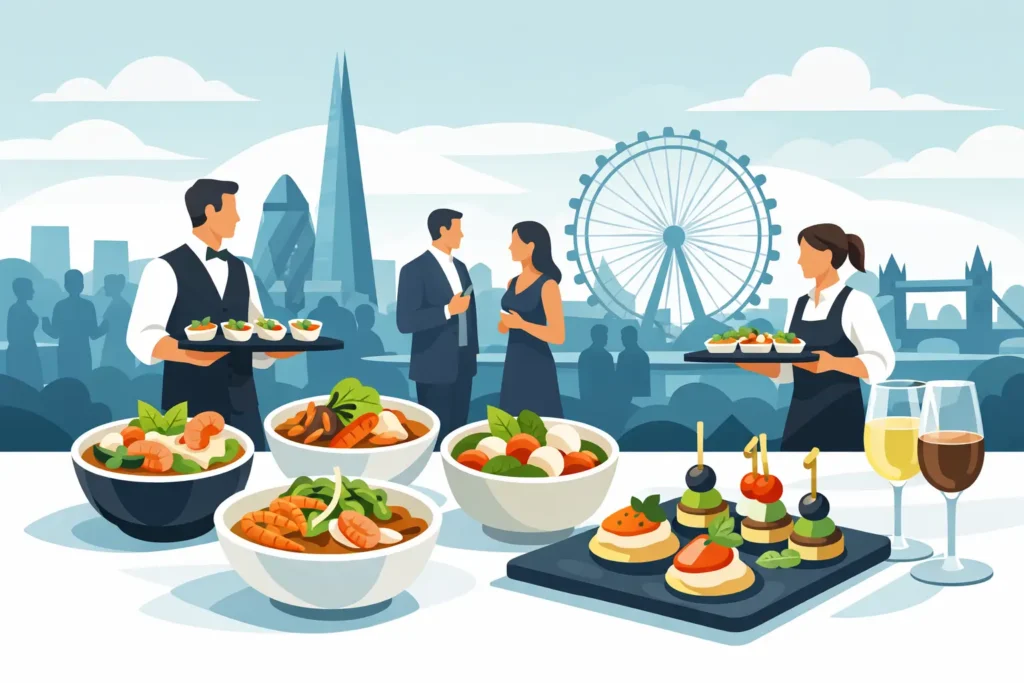
A packed launch schedule, a tight venue turnaround or a crew arriving in staggered waves can make a formal sit-down meal impractical. That is where canapes bowl food earns its place. It gives guests creative, freshly prepared dishes they can enjoy while networking, celebrating or getting back to set – without losing the sense that they have been properly looked after.
For London events, the strongest catering is never just about what looks good on a tray. It has to arrive at the right time, suit the room, meet dietary needs and keep service moving without interrupting the purpose of the day. Canapés and bowl food can do all of that, provided the menu and service plan are built around the event rather than selected from a one-size-fits-all package.
What is the difference between canapés and bowl food?
Canapés are small, hand-held bites designed for easy eating. Think crisp bases topped with smoked fish, miniature Yorkshire puddings with slow-cooked beef, delicate vegetable tarts, arancini or spiced chicken skewers. They are ideal for welcome drinks, short receptions and events where people need one hand free for a glass, a phone or a conversation.
Bowl food is more substantial. Served in small bowls with a fork or spoon, it brings the warmth and satisfaction of a meal into a standing reception format. A fragrant Thai green curry, braised lamb with creamy mash, wild mushroom risotto or jerk chicken with rice and peas can feel generous and comforting without requiring tables laid for every guest.
The two work particularly well together. Canapés set the tone as guests arrive, while bowl food follows when the event needs to carry people through the evening. The result feels relaxed but considered: restaurant-quality food, proper service and no long pause for a formal dinner.
When canapes bowl food is the right choice
This format is a natural fit for product launches, gallery openings, award evenings, press events, office celebrations and wedding receptions. It also works brilliantly backstage, in green rooms and at music or television events where guest movement and changing call times make seated dining difficult.
For a corporate gathering, it keeps energy in the room. Guests can move between conversations rather than being fixed to a table, and the host can make speeches or presentations without trying to reset an entire dining space. At a wedding, bowl food can offer a more sociable alternative to a three-course meal, especially for couples who want a party atmosphere from the start.
On a production, the priority may be different. A unit may need hot, nourishing food served across staggered breaks, with cast, crew and client teams all eating at different moments. In that case, individual bowls can be portioned and served quickly, while canapés provide a polished option for agency guests or a wrap celebration. It depends on the schedule, the space available and whether food is the main event or needs to support the work around it.
Build the menu around the guest journey
A good menu has rhythm. Start with lighter bites that are easy to pass around, then bring in warmer and more filling bowls as the reception develops. Contrast matters too: something crisp beside something creamy, a familiar favourite alongside a more adventurous global flavour, and enough vegetarian choices that they feel exciting rather than like an afterthought.
For example, a drinks reception could begin with sesame prawn toast, beetroot and goat’s cheese tartlets, crispy cauliflower bites with a punchy dipping sauce and mini chicken skewers. The bowl food service might then include fragrant coconut curry, slow-cooked beef with seasonal mash, roasted squash risotto and a bright Mediterranean grain bowl. Dessert bowls – perhaps sticky toffee pudding, berry Eton mess or chocolate mousse – provide a satisfying finish without creating a queue around a dessert table.
The best balance is usually a mix of crowd-pleasers and personality. A menu should reflect the brief, whether that means modern British comfort food, vibrant Caribbean dishes, pan-Asian flavours or a fully plant-forward spread. For a brand launch, colours, ingredients and presentation can also be considered as part of the wider look of the event.
Portion planning is not guesswork
The number of items needed depends on the time of day, event duration and what guests have been told to expect. A one-hour drinks reception before dinner needs a very different approach from a four-hour evening launch where canapés and bowls are the only food available.
If bowl food is replacing dinner, guests need enough variety and volume to feel fed, not merely entertained. A practical starting point is a selection of canapés followed by several savoury bowls per person, with vegetarian and vegan choices integrated into the main offer. Longer events may need a late addition, such as sliders, loaded fries or another substantial hot option.
Drinks also affect appetites. Evening receptions with a full bar tend to require a more generous food plan, while a daytime conference may call for lighter dishes and a well-timed sweet course. Honest planning at the start prevents the classic catering problem: beautiful trays disappearing within ten minutes while half the guest list is still arriving.
Service and logistics matter as much as the food
Canapés and bowl food look effortless when they are properly managed. Behind the scenes, that means agreeing access times, checking kitchen facilities, planning equipment, confirming service points and allowing for venue restrictions before the event day. A fifth-floor office, a listed building, a studio with limited power or a remote location all need different preparation.
For larger guest numbers, tray service needs enough trained staff to cover the room rather than clustering at one doorway. Bowls can be served from roaming trays, a staffed station or a combination of both. Roaming service is excellent for keeping guests engaged, while a station can provide a clear focal point and help manage busy periods. For some events, a station works best for the more substantial bowls, with canapés continuing to circulate.
Timing is equally important. Food should not all appear at once. Staggering the service gives guests a reason to stay, creates a sense of abundance and allows hot dishes to reach the room at their best. At production events, catering teams must work around call sheets, lock-offs, rehearsals and changing break times without adding pressure to an already demanding day.
Dietary catering should feel fully part of the menu
Guests should never have to settle for a plain side salad because they are vegan, gluten-free or avoiding a specific allergen. A well-designed bowl food menu gives everyone genuine choice, with dishes that are satisfying in their own right.
That requires clear advance information and careful kitchen processes. Allergens must be identified, dishes labelled where appropriate and service staff briefed so they can answer questions confidently. For productions and high-profile events, this becomes even more important: dietary information can change at short notice, and meals may need to be separately packed, delivered to a particular holding area or served at a specific time.
There are practical trade-offs. A menu with dozens of variations can slow service and increase the risk of confusion, particularly in a tight venue. The smarter approach is to create a generous core menu with naturally inclusive dishes, then plan safe alternatives for confirmed individual requirements. Guests receive thoughtful food, and organisers retain control of the operation.
Presentation should suit the occasion
The beauty of this format is its flexibility. At a polished investor event, elegant porcelain bowls, smart uniformed staff and refined garnishes may be exactly right. At a backstage music event or a lively creative launch, compostable bowls, colourful food stations and bolder flavours can feel more appropriate.
Waste-conscious choices need not compromise presentation. The right packaging and serviceware can be practical, attractive and suited to venues where washing-up facilities are limited. What matters is that bowls are comfortable to hold, cutlery is easy to use and guests are not left balancing food awkwardly while they network.
For organisers, the goal is simple: food that photographs beautifully, tastes even better and works in the real conditions of the event.
Make the catering plan work before the first guest arrives
A strong canapés and bowl food brief starts with a few real-world details: guest count, timings, venue access, kitchen setup, service style, dietary list and budget. From there, the menu can be shaped around the atmosphere you want and the practical demands you cannot afford to overlook.
D’Lights Event Catering plans every service with those details in mind, from creative and flavoursome dishes from around the globe to staffing, hot holding, equipment and punctual delivery. Whether guests are arriving for a London launch, a wedding reception or a demanding production schedule, the right food format keeps them looked after and keeps the event moving. Request a menu and book the service that fits your day, not just your guest list.