
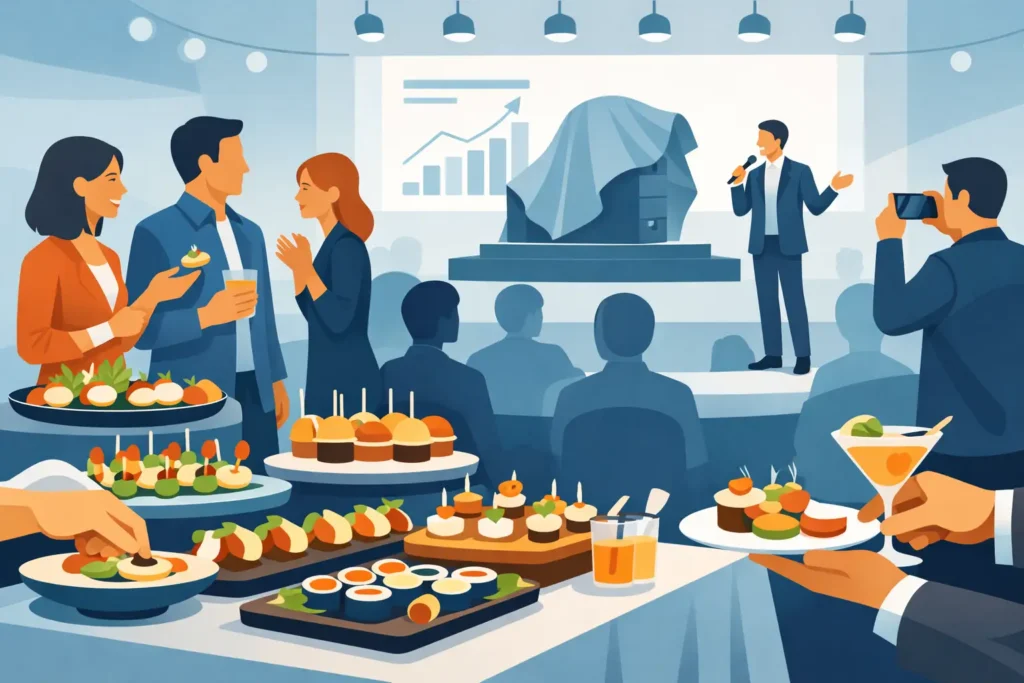
A product reveal can be over in minutes, but the impression guests take away is built across the whole event. Product launch catering gives people a reason to arrive early, stay longer, talk comfortably and remember the atmosphere around your brand. When the food is fresh, beautifully presented and timed around the launch moment, it becomes part of the experience rather than a practical afterthought.
For London launch events, that means more than choosing an attractive menu. The catering must work around guest arrivals, press calls, presentations, filming, product demonstrations, venue access and the inevitable last-minute change. Whether you are introducing a new beauty line, car, tech platform, fashion collection or consumer product, the food service needs to look polished while operating with production-level precision.
Product launch catering starts with the event story
The strongest launch menus reflect the personality of the product without becoming a gimmick. A premium fragrance launch may call for elegant canapés, refined grazing displays and sparkling drinks served by attentive staff. A streetwear or music-led release may suit vibrant global street food, bold flavours and grab-and-go options that keep the room moving. For a health, fitness or wellness brand, colourful plant-forward bowls, fresh juices and lighter breakfast or lunch choices can reinforce the message naturally.
The point is not to force every dish into a branded shape. It is to create a food experience that feels considered. Colour, texture, service style and menu language all influence how guests read the room. A menu should support the brand world, while still giving people something genuinely satisfying to eat.
This is where tasting, planning and honest menu guidance matter. A beautiful canapé that is difficult to eat while holding a glass, mobile phone and event programme may not be right for a busy networking reception. Equally, an elaborate plated meal can slow down an event built around short presentations and product interaction. The best format depends on the guest journey.
Plan service around the reveal, not the other way round
At a launch, timing is everything. If food is served too early, guests can finish and drift away before the key announcement. If it arrives late, hungry guests become distracted during a presentation. Service should be mapped against the event schedule from the start.
For an evening reception, welcome drinks and a small first round of canapés can settle guests as they arrive. Service may then pause or reduce during a speech, film screening or reveal, before a fuller selection comes out once the product has been introduced. This keeps attention where it belongs without leaving people waiting too long for food.
Daytime product launches need equally careful thought. A breakfast briefing may require hot breakfast baps, pastries, fruit and barista-style refreshments ready before the first arrival. A midday press event may work better with individual bowls, packed lunch options or light buffet service that can be eaten quickly between interviews. If the launch runs into the afternoon, a well-stocked grab-and-go station prevents energy levels dropping without interrupting filming or demonstrations.
For events with VIP guests, media and wider attendees, staggered service can make a real difference. A separate green room or holding area may need discreet refreshments before doors open, while guests in the main space receive a more theatrical food moment later. The kitchen, staffing and delivery schedule need to account for both without creating visible disruption.
Build in room for real event conditions
Production schedules move. A guest speaker is delayed, an invited creator brings a team, a demonstration runs over, or the venue requires a later loading time than expected. Good catering planning leaves room to respond.
That means confirming access times, lift dimensions, loading arrangements, power, water, waste points and available prep space well before event day. In some London venues, there is no working kitchen at all. In others, the kitchen is a long way from the event floor or shared with another supplier. Mobile kitchens, hot boxes and carefully planned portable equipment can keep food at the right temperature when the venue does not make it easy.
A capable caterer should also understand the difference between an event that needs a visible food display and one that needs food to appear quietly, exactly when called. Both demand preparation. Only one demands a focal point.
Choose a format that suits your guests
There is no single best menu for a launch. The right choice depends on how many people are attending, how long they will stay, whether they are seated, what the venue allows and how much of the event is built around networking.
Canapé service is ideal when the priority is conversation, circulation and a premium feel. It works particularly well for evening launches, showroom events and receptions where guests should be free to explore the product. The menu needs enough variety to feel generous, including substantial bites if the event falls at a mealtime.
Food stations create energy and theatre. Think creative and flavoursome dishes from around the globe, served from a styled counter or live-cooking point. They can become a natural gathering place, but they need enough space to prevent queues from blocking the product displays or the entrance. Stations are often strongest after the reveal, when guests have time to socialise.
Bowl food gives a more substantial meal without the formality of a sit-down dinner. It is useful for launches with longer guest dwell time, especially where attendees need to eat but the layout does not suit full table service. Grab-and-go options are practical for press days, outdoor activations and events where guests arrive in waves.
A plated menu can be exactly right for an intimate launch dinner or a client event with a limited guest list. It offers control over pacing and presentation, though it requires more staffing, tableware and a schedule guests will follow. It is less suitable where people are expected to move between experiences throughout the evening.
Dietary requirements are part of the brief
A launch menu cannot treat dietary needs as an add-on. Guests should have clear, appealing choices whether they are vegan, vegetarian, gluten-free, dairy-free, halal or managing allergies. There is a major difference between providing one leftover alternative and designing a menu where everyone feels included.
Collect requirements early where possible, then build the service plan around them. Labelling must be accurate and visible, especially at buffets and food stations. For guests with serious allergies, service teams need a clear process for identifying the dish, avoiding cross-contact and communicating confidently. This protects guests, reassures organisers and keeps service moving.
Dietary planning also affects quantities. If a large percentage of guests are vegan or prefer lighter choices, a token plant-based dish will not be enough. The menu should reflect the room you are actually welcoming.
Presentation matters, but so does practicality
Food is part of the visual language of a product launch. Serving boards, bowls, linens, table styling and staff presentation should sit comfortably alongside the brand’s set design. A bright, playful product may suit vivid produce, layered displays and informal street-food styling. A luxury launch may call for clean lines, restrained detail and elegant trays passed through the room.
Yet visual impact should never create operational problems. Towers of delicate canapés can be difficult to replenish. Loose sauces and heavily dressed dishes are risky near samples, garments or high-value products. Strong aromas can compete with fragrance launches or sensitive technical demonstrations. These are small details until they are not.
Waste-conscious planning belongs here too. Right-sized menus, sensible portioning, reusable serviceware where suitable and responsible packaging for off-site teams can reduce unnecessary waste without making the event feel less generous. For a brand audience paying close attention to environmental choices, these decisions are visible.
Make the catering team part of the production plan
The most reliable event catering teams do not arrive with food and wait to be told what happens next. They work from a clear running order, understand who has authority on site and know when they can load in, set up, serve, clear and reset.
Share the schedule, floor plan, guest count, anticipated attendance pattern and any filming or photography requirements. If food cannot be served while cameras roll, say so. If a brand ambassador needs a plate ready backstage at a specific time, include it. If there is a confidential reveal, the caterer should know which areas are off limits and when.
D’Lights Event Catering plans around these realities, from call-time deliveries and hot food holding to staffed service, menu customisation and the practical details that can affect the entire event. That production-aware approach is especially valuable when a launch has multiple suppliers, tight venue access or a schedule with no spare minute.
The right product launch catering does more than feed a room. It gives guests a welcome worth arriving for, a reason to stay after the applause and a hospitality experience that supports the product you have worked so hard to introduce. Share your event timing, venue and guest profile early, then build the menu around the moment you want people to remember.