
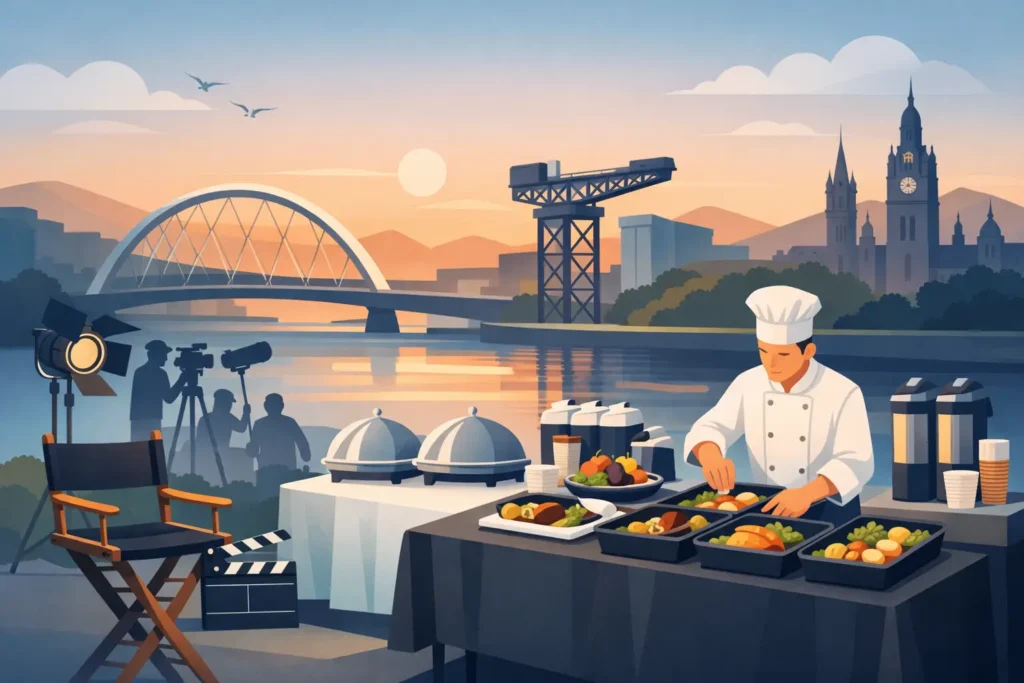
A crew can work around rain, rewrites and a last-minute location change. What they cannot work around is arriving at the food point to find cold trays, missing dietary meals or a queue that eats into a tight turnaround. Exceptional TV and film catering in Glasgow, Scotland is not simply about serving good food. It is about protecting the rhythm of the entire production day.
For location managers, production coordinators and line producers, catering is crew welfare and practical schedule management in one. When it is planned properly, cast and crew get a proper break, departments stay where they need to be, and the next set-up starts with people fed, focused and ready to go.
What exceptional TV and film catering in Glasgow requires
A successful catering plan starts with the call sheet, not a generic menu. The first meal of the day may need to be ready before sunrise; lunch may need to run in staggered waves around camera, sound and lighting requirements; and a late wrap can turn a planned afternoon snack into an essential hot dinner.
Glasgow productions can also bring a broad range of working environments. One day may be based in a controlled studio, the next in a city-centre unit base, a heritage venue, an industrial site or an exposed location where the weather changes by the hour. The caterer needs to understand access, parking, power, water, holding temperatures, service space and the practical route from kitchen to crew.
That operational detail should never come at the expense of flavour. A tired crew does not need bland, predictable food served because it is easy. They need generous, freshly prepared dishes that travel well, hold well and still feel like a proper meal when the day has been long.
Build the food plan around the call sheet
There is no single ‘film set lunch’. A 25-person commercial shoot, a high-volume drama unit and an overnight music production all need different service patterns. The right package is built around crew numbers, shoot hours, location restrictions, departments on staggered breaks and the amount of time people genuinely have to eat.
For an early call, that might mean hot breakfast options alongside lighter grab-and-go choices for crew moving straight into prep. During the main service, a staffed hot buffet can work brilliantly where there is space to form an orderly line. On a split unit or a remote shoot, individually packed hot boxes may be the more sensible answer, getting a complete meal directly to people who cannot leave their post.
Service timing matters as much as the menu
A great menu served 45 minutes late is still a production problem. Catering teams should confirm delivery windows, set-up times and agreed service points well before the shoot begins. They should also know who can approve a change when the schedule moves, because it often will.
Build in a little contingency where the production allows it. Extra drinks, a protected reserve of meals and a later refresh point can make a real difference when a scene overruns. This is not about over-ordering for the sake of it. It is sensible planning that prevents a hard-working crew from being left short.
Keep communication direct
One nominated production contact and one catering lead avoids crossed wires. Share the latest call sheet, daily headcount, unit moves, site contact, access instructions and any known schedule risks. If talent requirements are confidential, provide the information required to serve them safely without circulating unnecessary details.
D’Lights Event Catering approaches this coordination as part of the job, not an added complication. Food, timings, service equipment and staffing need to work as one plan, particularly when the production is operating under pressure.
Feed a mixed crew without slowing service
Dietary requirements are not an afterthought to be handled with a label at the end of the table. They need to be collected early, checked carefully and built into the menu plan. Vegan, vegetarian, halal, gluten-free and allergen-aware meals should be satisfying choices in their own right, not a less appealing substitute for the main offering.
The crucial distinction is between a preference and a medical or allergen requirement. Production teams should flag the latter clearly, including any concern around cross-contact, so the catering team can prepare, package and identify meals appropriately. Clear labelling supports everyone, especially when service is busy and someone else is collecting food on behalf of a colleague.
Choice also matters. A menu with balanced proteins, vegetables, carbohydrates and lighter options gives crew a meal that suits the physical demands of their role. Someone lifting kit in wet weather may welcome a warming curry, slow-cooked dish or substantial pasta bake. Someone heading back into costume, make-up or a tightly timed interview may prefer a fresh salad bowl, wrap or lighter hot option. Good caterers provide both without creating wasteful excess.
Location logistics that protect the day
The food may be the visible part of catering, but the less visible preparation is what keeps service dependable. Before the first delivery, a professional team should assess where food can be prepared or held, where crew will collect it, what equipment can be brought in and how waste will be managed.
On a location with limited indoor space, mobile kitchens and portable hot boxes can provide flexibility without compromising standards. In a studio, a properly organised craft station can keep tea, coffee, fruit, snacks and quick bites available between takes, reducing the temptation for departments to disappear off site. For a unit base with difficult vehicle access, delivery timings and carrying distances need to be considered rather than discovered on the morning.
Health and safety stays central throughout. Hot food must remain at safe temperatures, working areas must be clean and controlled, and service teams need the confidence to operate around cables, vehicles, equipment and busy crew traffic. Waste-conscious packaging is also worth discussing at the planning stage, especially where there is no washing-up area or the production has specific environmental targets.
A menu that keeps energy and morale up
The strongest production menus combine familiar comfort with enough variety to make lunch feel like a reward rather than another box to tick. Creative and flavoursome dishes from around the globe can sit comfortably alongside crowd-pleasing British favourites, provided they are designed for the service conditions.
A winter Glasgow location day may call for soups, hearty stews, fragrant curries, roasted vegetables and warming puddings. A summer exterior shoot may suit vibrant grain salads, grilled dishes, fresh wraps and chilled fruit. The answer depends on the season, the crew and the schedule, not on a fixed catering package.
Think beyond the headline lunch as well. Good coffee at call time, replenished water, fruit, cakes, savoury snacks and a smart late-afternoon pick-me-up can lift the mood when concentration is fading. For long days, a second hot service may be a better investment than a larger first lunch. It gives people a genuine reset before the final push.
Presentation still counts. Even on a fast-moving set, clean service areas, appealing displays and properly portioned food show the crew that their welfare has been considered. That feeling travels through a production. People notice when they are being looked after.
Brief your Glasgow catering team early
The best time to solve a catering issue is before the crew arrives. As soon as dates are pencilled in, share the likely headcount, location type, proposed call times, budget range and any non-negotiable dietary or cultural requirements. A useful brief also includes parking arrangements, stairs or lifts, generator availability, on-site contacts and whether the unit is likely to move during the day.
From there, the catering plan can be shaped around what will actually happen on set: hot meals where and when they are needed, capable staff where service requires them, and food that gives every department confidence in the day ahead. Send over the call sheet, talk through the pressure points and request a menu and booking while the production plan is still taking shape.