
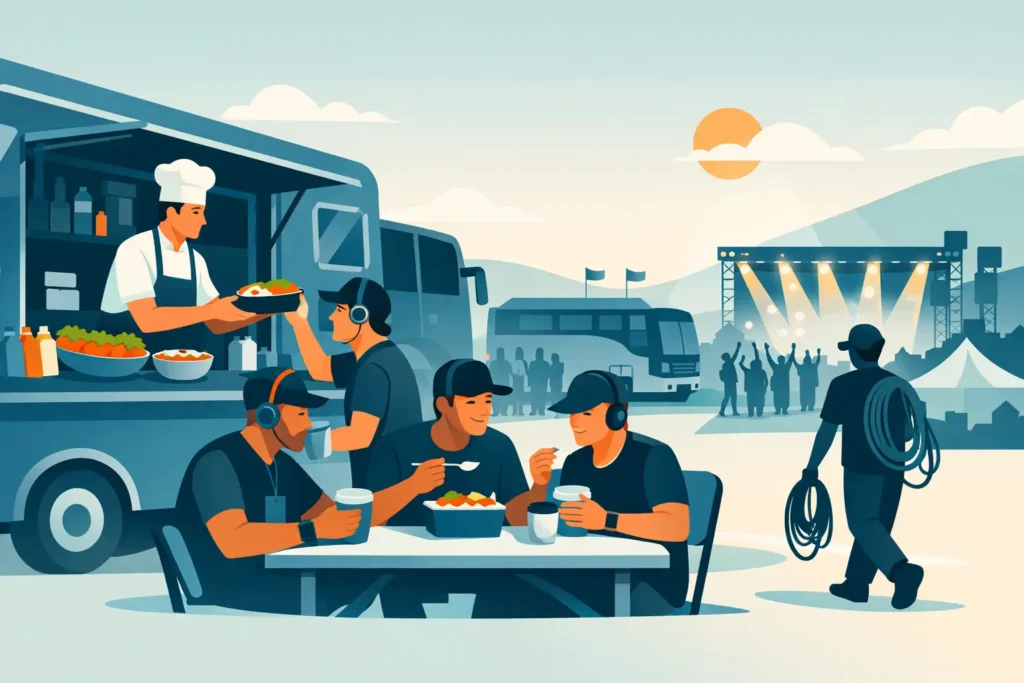
When a festival gate opens or a tour bus rolls into the next venue, nobody has time for a catering delay. The right festival and tour caterers do far more than provide food: they protect crew welfare, keep departments on schedule and give artists, guests and production teams a reliable place to refuel.
For live events, food has to work as hard as the people eating it. It must arrive at the agreed call time, stay hot when service is staggered, suit a wide range of dietary needs and still feel genuinely enjoyable after a long load-in, soundcheck or overnight drive. That calls for experienced planning, not a one-size-fits-all menu.
What Festival and Tour Caterers Need to Get Right
Touring and festival catering operates in moving, high-pressure environments. A crew may need breakfast before dawn, hot lunch between rehearsals and a late supper once the audience has gone home. At a festival, service may need to cover backstage artists, production offices, security, runners, technical teams and VIP hospitality, often across separate areas of a site.
The practical challenge is timing. A great menu served 45 minutes late can affect a lighting call, delay a transport departure or leave a crew working on empty. Caterers need to understand production schedules, build service around key changeovers and communicate quickly when timings shift. Live work rarely follows the original running order perfectly, so calm coordination matters as much as the food itself.
Venue restrictions also shape the job. Some sites have a full working kitchen; others offer little more than a hardstanding, limited power and a water point at the far end of a field. Mobile kitchens, hot boxes and well-planned equipment make the difference between an improvised meal break and a service that runs properly.
Food That Keeps People Going
A backstage meal should be satisfying without leaving people sluggish for the next shift. The strongest menus balance familiar comfort with fresh, flavoursome dishes from around the globe. Think slow-cooked curries with fragrant rice, grilled chicken and roasted vegetables, hearty pasta bakes, colourful grain bowls, fresh salads and properly generous plant-based mains.
Variety matters across a multi-day event. Repeating the same tray bake and sandwich selection might be cheap on day one, but it quickly becomes a morale issue when a crew is working sixteen-hour days. Rotating menus, changing cuisines and offering both lighter and more substantial choices gives people something to look forward to.
This does not mean every meal needs to be elaborate. A simple hot breakfast roll, good coffee and fruit can be exactly right for an early call. A grab-and-go station with wraps, salads, snacks and cold drinks may be the better answer during a tight turnaround. The point is to match the format to the working day rather than force every service into a formal lunch window.
Dietary requirements need the same attention as the main menu. Vegetarian, vegan, halal, gluten-free and allergen-aware options should be planned from the outset, clearly labelled and served with care. It is far better to create dishes that stand up in their own right than to offer one token alternative at the end of the line. People notice the difference, particularly when they are feeding themselves backstage for several consecutive days.
Start With the Schedule, Not the Menu
The most useful catering brief begins with the production plan. Before choosing dishes, establish who is being fed, where they will be, how long they have and what changes are likely. Guest numbers are important, but the service pattern is often more important still.
A tour day may require breakfast at the hotel, lunch at the venue, artist hospitality in dressing rooms and crew dinner after load-out. A festival may need separate service points for the main stage team, touring crew, office staff and premium guests. Combining every requirement into one service can create queues and leave the wrong people waiting at the wrong time.
A clear brief should cover:
- expected covers for each service, with a realistic allowance for last-minute additions;
- call times, rehearsals, set times, curfews and planned meal windows;
- venue access, parking, loading routes, power, water and kitchen facilities;
- dietary information, allergen processes and any artist-specific hospitality requirements; and
- who has authority to approve changes on site when timings or numbers move.
The last point is easily missed. A named contact who can make quick decisions avoids unnecessary calls travelling through several departments while a service deadline approaches.
Choose a Caterer With Production Experience
Restaurant-quality food is valuable, but it is only half the job. Festival and touring clients need a partner who understands site access, accreditation, loading restrictions, pass systems, changing schedules and the reality of feeding people while stages are live.
Ask how the caterer manages a late-running soundcheck or an additional coach arriving unexpectedly. Find out whether they can provide hot boxes for teams unable to leave their work area, whether they have mobile kitchen capability and how food will be held safely during extended service. These are not minor operational details. They determine whether the catering supports the event or becomes another issue for production to solve.
Staffing should also reflect the scale and style of service. A self-service crew meal for 80 people requires a different team from plated artist dining, VIP canapés or a branded sponsor lounge. Experienced caterers will advise where front-of-house staff are useful, where a managed buffet is sufficient and where a grab-and-go solution will keep the day moving best.
D’Lights Event Catering plans around these realities, supplying creative menus alongside the equipment, staffing and hands-on coordination needed for busy backstage, location and live-event environments.
Build Flexibility Into the Budget
A fixed per-head price can look attractive, but it does not always reflect what the event needs. A touring party may need fewer formal meals but more all-day snacks, tea, coffee, hydration and late-night food. A festival may require a larger kitchen operation, additional generators, longer staffing hours or separate food areas across a site.
Be open about budget early, then ask for a proposal that explains what is included. Delivery, kitchen hire, service staff, disposable or reusable serviceware, dietary alternatives, waste removal and overtime can all affect the final figure. A clear package helps organisers compare like for like rather than discovering essential costs once the show is already in motion.
There are sensible trade-offs. If budget is tight, reduce the number of menu choices rather than the portion size or quality of dietary provision. Use a well-designed buffet for crew meals, then reserve plated service or premium grazing tables for artists, clients or sponsors where presentation is central to the experience. Good caterers will help you put spend where it has the greatest impact.
Do Not Treat Waste and Safety as Afterthoughts
High-volume catering creates waste quickly, particularly when food is served outdoors or across several backstage areas. Thoughtful planning reduces this without leaving people underfed. Accurate numbers, staggered cooking, sensible portions and packaging that suits the site all help. For mobile teams, individually packed meals can be useful, but only where they genuinely solve a timing or access problem.
Food safety requires the same discipline. Hot food needs safe holding and transport, chilled items need appropriate refrigeration, and allergen controls must remain clear even when service is busy. A professional operation will have procedures in place, but organisers should still share venue rules, local restrictions and any production-specific health-and-safety requirements well before the event.
For outdoor events, plan for weather too. Wind, rain, heat and uneven ground all affect where food can be prepared and served. A practical catering setup protects both the meal and the people delivering it.
Give Your Crew a Meal Break Worth Taking
The best festival and tour catering is felt in the rhythm of the day. The crew eats on time. The vegan option is as appealing as everything else. The artist hospitality arrives where it should. The production office is not chasing missing coffee, late deliveries or a replacement for an unsuitable meal.
Share the running order early, flag changes as soon as they happen and choose a caterer prepared to work around the reality of live production. With fresh food, dependable logistics and a team that stays calm under pressure, meal breaks become one less thing to worry about – and one more reason your people can give their best when it counts.